 Skip to content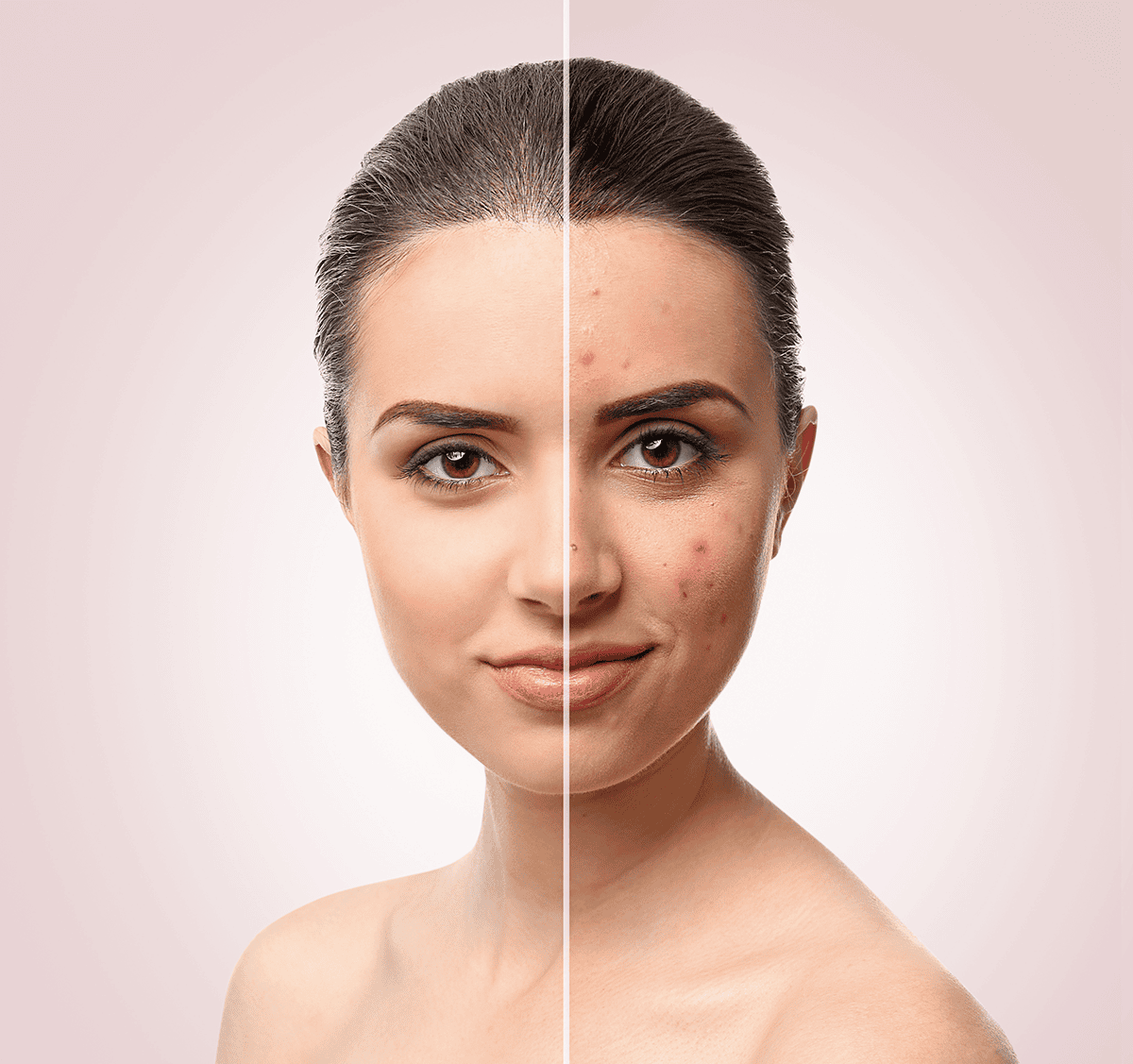
You thought you left acne behind with your teenage years. And yet here you are, in your late 30s or 40s, dealing with breakouts that feel more frustrating now than they ever did in high school. The breakouts look different. They sit in different places. And the products that worked when you were 17 either do nothing or make things worse.
Adult acne after 35 is a distinct condition from adolescent acne. It has different causes, different patterns, and it requires a different treatment approach. At Kontour Medical Aesthetics, our acne treatment programs are designed specifically around the complexities of adult skin, where acne and aging often coexist.
This is the most common driver of adult acne. In the late 30s and into the 40s, the hormonal landscape begins to change. Estrogen and progesterone levels fluctuate and eventually decline as perimenopause approaches. Meanwhile, androgens (the group of hormones that includes testosterone) remain relatively stable or even increase in proportion.
Androgens stimulate the sebaceous glands to produce more oil. They also influence how skin cells behave inside the hair follicle, making them stickier and more likely to clog pores. The result is breakouts that tend to cluster along the jawline, chin, and lower cheeks, areas where androgen receptors are most concentrated.
This is why adult acne in women frequently flares in the week before menstruation, when progesterone rises and then drops sharply. It is also why many women who never had acne as teenagers develop it for the first time in their late 30s or 40s.
Here is the irony: the products you are using to fight aging may be contributing to your breakouts.
Retinols, AHAs, vitamin C at high concentrations, and multiple active serums layered in a single routine can compromise the skin’s moisture barrier over time. When the barrier is damaged, the skin loses water, becomes irritated, and compensates by producing more oil. That excess oil, combined with the inflammation from a compromised barrier, creates conditions for breakouts.
Many women in their late 30s and 40s are using five or more active products. Each one may be fine on its own, but combined without a strategy, they can strip the skin’s protective layer and trigger reactive breakouts.
Chronic stress elevates cortisol levels, and cortisol has a direct effect on sebaceous gland activity. Higher cortisol means more oil production. More oil means more clogged pores. The breakouts tend to be deeper, more inflamed, and slower to heal than surface-level blemishes.
If your breakouts seem to worsen during high-pressure periods at work, during family stress, or when sleep quality declines, cortisol is likely playing a role.
While diet does not cause acne in the traditional sense, certain dietary patterns can aggravate it. High-glycemic foods (refined sugars, processed carbohydrates) cause insulin spikes that can increase androgen activity and sebum production. Dairy has also been associated with acne in some people, though the mechanism is less well understood.
These factors do not affect everyone equally. But for women who are already hormonally predisposed to adult acne, dietary triggers can amplify the problem.
The instinct when breakouts appear is to reach for the products that worked before. Benzoyl peroxide washes. Salicylic acid pads. Oil-free everything. Harsh cleansers designed to strip oil from the skin.
These products were formulated for adolescent skin, which is oily, resilient, and recovers quickly from aggressive treatment. Adult skin after 35 is different. It is thinner, less resilient, more prone to dryness, and already dealing with the early effects of collagen loss.
Stripping oil from adult skin with harsh cleansers damages the moisture barrier, triggers more oil production, and accelerates the signs of aging. You end up with skin that is simultaneously oily, dry, irritated, and breaking out.
Adult acne requires products and treatments that address breakouts without compromising skin health. The approach needs to be strategic rather than aggressive.
The first step is understanding what is driving your specific breakouts. Hormonal acne looks and behaves differently from barrier-damage acne. Stress-related breakouts differ from congestion caused by product buildup. The treatment changes depending on the cause.
A medical skincare consultation evaluates your skin, reviews your current routine, identifies potential triggers, and determines the root cause before recommending treatment. This diagnostic step prevents you from spending months on products that address the wrong problem.
When over-the-counter products have failed, prescription topicals offer a higher level of efficacy.
Tretinoin normalizes cell turnover inside the follicle, preventing the buildup that leads to clogged pores. It also stimulates collagen production, making it one of the few products that treats acne and aging simultaneously.
Azelaic acid at prescription concentrations reduces inflammation, kills acne-causing bacteria, and helps fade post-inflammatory marks. It is gentler on the skin barrier than benzoyl peroxide and well-tolerated by most skin types.
Topical antibiotics (like clindamycin) may be used short-term to reduce bacterial load in moderate to severe cases. They are typically combined with other products rather than used alone to prevent antibiotic resistance.
These products are most effective when part of a customized skincare plan that accounts for your acne type, your aging concerns, and your skin’s tolerance.
Medical-grade chemical peels using salicylic acid, glycolic acid, or combination formulations can clear congested pores, reduce active breakouts, and accelerate the fading of post-inflammatory marks. They work well as a complement to a prescription routine by providing periodic deep exfoliation that keeps pores clear.
For adult acne, medium-strength peels are typically more effective than gentle spa peels. The clinical setting allows for stronger concentrations and more precise application.
This is the unique challenge of adult acne. You want to clear breakouts, but you also want to address fine lines, texture, and tone. The two goals sometimes pull in opposite directions, because acne treatments tend to be drying while aging skin needs hydration and barrier support.
The solution is a carefully balanced routine. Tretinoin addresses both acne and collagen production. Hyaluronic acid and ceramide-based moisturizers maintain hydration without clogging pores. Niacinamide reduces inflammation, controls oil, and supports the skin barrier. SPF prevents post-inflammatory hyperpigmentation from darkening.
Building this routine requires professional guidance because the ingredient interactions, concentrations, and application sequence all affect whether the products work together or against each other.
Spironolactone is an oral medication that blocks androgen receptors. It reduces the hormonal signals that drive oil production and breakouts. For women with hormonal adult acne that has not responded adequately to topical treatments, spironolactone can be highly effective.
It is a prescription medication that requires medical supervision and is not appropriate for everyone. Blood pressure monitoring and potassium level checks are standard during treatment. But for the right candidate, it can produce a significant reduction in hormonally-driven breakouts within two to three months.
This is a conversation to have with your healthcare provider or during a clinical consultation. It is mentioned here because many women dealing with adult acne are not aware it exists as an option.
Adult acne leaves marks. The post-inflammatory hyperpigmentation (dark spots) and, in some cases, textural scarring can be as frustrating as the breakouts themselves.
Treating active acne and treating marks are two separate processes. The active acne needs to be controlled first. Treating scars while breakouts are still occurring risks making the scarring worse and wastes treatment resources on skin that continues to sustain new damage.
Once the acne is controlled, treatments like microneedling, laser therapy, and targeted peels can address the marks and scarring left behind.
If your breakouts have persisted for three months or more despite a consistent routine with over-the-counter products, professional intervention is likely needed. If you are dealing with deep, cystic breakouts along the jawline or chin, hormonal factors are almost certainly involved and topical products alone are unlikely to resolve them.
Adult acne is treatable. But it requires a different approach than the one that worked when you were younger. The first step is understanding what is causing your breakouts. The second is building a treatment plan that addresses acne and aging together rather than sacrificing one for the other.
Contact Kontour Medical Aesthetics to schedule a consultation and get a clear assessment of what is driving your adult acne and which treatment approach will work for your skin.
Stay informed with expert insights, treatment guides, and the latest developments in medical aesthetics from Nurse Practitioner Belita Savage.


