Skip to content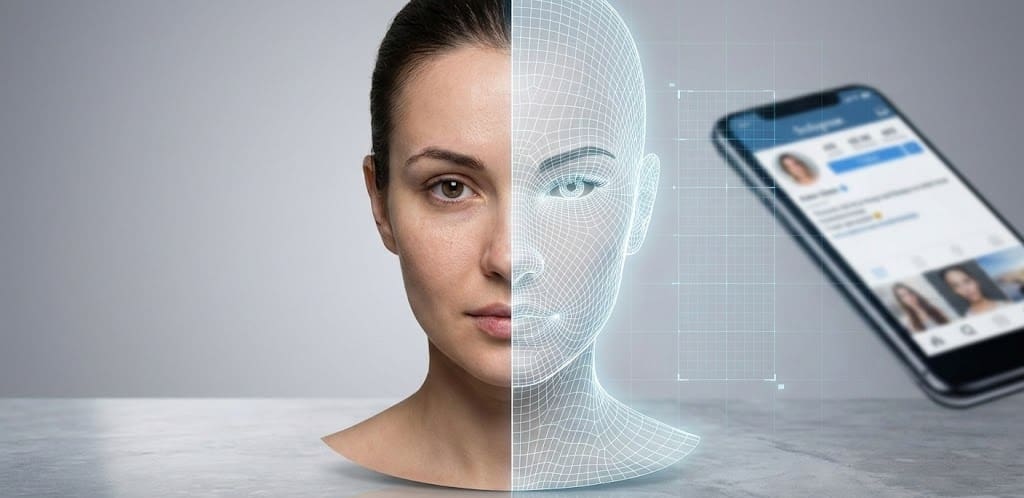
Open Instagram and scroll through beauty content. You’ll notice something strange: everyone is starting to look the same.
Cat eyes. Full lips. Small nose. High cheekbones. Poreless skin. Sharp jawline. A face that’s symmetrical, smooth, and oddly familiar regardless of the person’s actual ethnicity, age, or natural features.
This is “Instagram Face,” a term coined by journalist Jia Tolentino to describe a specific, homogenized beauty standard that social media has manufactured. And it’s not just affecting what people post online. It’s changing what people ask for in aesthetic clinics.
A 2024 PMC study analyzed facial proportions of the top 100 female beauty influencers. The finding: despite coming from different ethnic backgrounds, the majority looked remarkably alike. The researchers described an “ideal Instagram face” characterized by a small nose, full lips, high cheekbones, and a chiseled jawline.
The study noted something troubling about this homogeneity: it raises concerns about cultural and ethnic inclusivity in online spaces and highlights the need for broader representation in the digital beauty narrative.
Tolentino described Instagram Face as “distinctly white but ambiguously ethnic,” featuring elements borrowed from multiple racial backgrounds but flattened into a single template. Big lips here, a small nose there, tan skin, cat eyes. It’s a face designed to be universally appealing by algorithm standards, not a face that reflects anyone’s actual heritage or individuality.
The technology works like this: Instagram and Snapchat use AI to map facial features, then overlay digital enhancements. Skin becomes poreless. Lips plump. Noses shrink. Eyes widen. The filter creates an idealized version that exists only digitally.
The problem is that people then want to look like their filtered selves.
A 2022 survey by the American Academy of Facial Plastic and Reconstructive Surgery found that 79% of plastic surgeons reported patients seeking improvement in their physical appearances with the desire to look better in selfies. A 2021 survey from the same organization found that 72% of surgeons saw patients requesting procedures inspired by images on social media.
This represents a fundamental shift. Previously, patients brought photos of celebrities to consultations. Now they bring filtered selfies. As cosmetic surgeon Paul Banwell noted in 2024: “People used to come to see me asking to look like a particular celebrity, but many patients come to me now wanting to look like the filtered version of themselves.”
British cosmetic doctor Tijion Esho coined a term for this: Snapchat dysmorphia. Patients seeking surgery to look like their digitally altered photos, with fuller lips, bigger eyes, or a thinner nose.
The data connecting social media use to cosmetic procedure demand is substantial:
A Boston University study published in the Journal of Clinical and Aesthetic Dermatology found that spending time on image-led platforms like Instagram and Snapchat, and in particular using filters or photo-editing apps before sharing photos, strongly correlated with respondents’ desire to undergo a cosmetic procedure.
A JAMA Facial Plastic Surgery study found that increased investment in social media platforms was associated with increased consideration of cosmetic surgery. Participants who used Snapchat filters had an increased acceptance of cosmetic surgery.
A 2022 study found that young adults who follow influencers who had undergone cosmetic procedures reported higher intentions to have cosmetic procedures themselves. They also overestimated the prevalence of cosmetic procedures undertaken by others.
The Dove Self-Esteem Project in 2020 found that 80% of girls had used an app or filter to change their appearance by age 13, and 94% of young women reported pressure to look a certain way.
Research from Snapchat shows more than 90% of young people in the United States, France, and the United Kingdom use filters. Meta reports that more than 600 million people have interacted with filters on Facebook or Instagram.
Here’s what concerns us as practitioners: when everyone wants the same face, we lose the beautiful diversity that makes each person unique.
A PMC study on social media and cosmetic surgery motivation found that the majority of patients seeking facial cosmetic surgery were motivated by the desire to achieve a more “Instagrammable” appearance. The researchers noted: the homogenization of beauty standards is a concerning aspect of social media’s influence. As filters and digital manipulation become more widespread, there is a growing tendency for individuals to aspire to a narrow set of aesthetic ideals.
Claire Raymond, a Princeton University researcher, criticized Instagram Face for erasing what makes the human face compelling. In her book on selfie culture, she wrote that these procedures “numb and freeze the face and skin, rendering less mobile the lips, the eyes, and the neck.”
This isn’t about whether aesthetic procedures are good or bad. It’s about whether we’re all moving toward the same template rather than enhanced versions of our individual selves.
To achieve “Instagram Face” through procedures rather than filters typically involves:
Each of these procedures individually can produce natural, beautiful results that enhance someone’s existing features. The problem is when they’re all combined to achieve a single standardized template that looks nothing like the person’s starting point.
The “Kylie Jenner package” became a real phenomenon. Clinics literally offered bundled services to help patients achieve one specific celebrity’s look, not their own best version.
The connection between social media, filtered images, and body image concerns is documented:
Body dysmorphic disorder (BDD) affects an estimated 2% of the general population but approximately 13% of people who seek cosmetic surgery. Studies suggest that up to 15% of individuals seeking plastic surgery meet the diagnostic criteria for BDD.
JAMA Facial Plastic Surgery published an article warning that “Snapchat dysmorphia” patients present “an unattainable look” and are “blurring the line of reality and fantasy.”
Dr. Neelam Vashi, director of the Boston University Cosmetic and Laser Center, described the shift she observed: patients started asking to look like their filtered selves, saying “Oh my gosh, I want to look like this” while showing digitally altered selfies.
The researchers’ recommendation: therapy, not surgery, for patients with dysmorphic tendencies. Cosmetic treatment is not effective for body dysmorphic disorder. The issue is psychological, not physical.
At our clinic, we focus on enhancing individual features, not replicating a template. Here’s what that looks like in practice:
We analyze your specific facial structure. Your face has its own proportions, asymmetries, and character. The goal isn’t to make you match someone else’s measurements. It’s to bring out the best version of your features.
We consider ethnic and family characteristics. Your nose, lips, and bone structure reflect your heritage. Erasing those features in favor of a homogenized ideal erases part of who you are. Enhancement should respect and work with your natural characteristics.
We talk about what “better” means for you specifically. When someone says they want to look “refreshed” or “better,” we ask what that means to them. Sometimes the answer reveals realistic goals. Sometimes it reveals filter-influenced expectations that need honest conversation.
We decline procedures when appropriate. Not every request should be fulfilled. When someone asks for changes that would look unnatural, out of proportion, or that suggest underlying body image issues, the ethical response is conversation, not injection.
There are signs that the tide may be turning. By 2025, over 323,000 videos on YouTube detailed filler dissolutions. People who “filled, filled, filled” are waiting for their filler to dissolve so they can start over with a more refined approach.
NYC plastic surgeon Dr. David Shafer noted that clients are increasingly asking for a more natural look and asking to dissolve their filler. The goal is no longer more. It’s proportion, subtlety, individuality.
Movements like #NoFilter and #InRealLife encourage people to embrace their natural appearance. Some influencers post unfiltered photos showing that authenticity is possible even in spaces designed around curation.
Practitioners are also speaking up. The consensus emerging: the homogeneous face is losing cultural relevance. We’re seeing a return to honoring bone structure, familial traits, and individuality.
If you’re considering aesthetic treatments, these questions can help clarify your motivations:
Where did this desire originate? Did you notice something in the mirror that bothered you, or did you notice it after seeing filtered images? There’s a difference between addressing a genuine concern and chasing a digitally manufactured ideal.
Would you want this if social media didn’t exist? This thought experiment can reveal whether your goals are truly your own or algorithmically influenced.
Are you seeking enhancement or transformation? Enhancement works with your existing features. Transformation tries to make you look like someone else. The first tends to produce satisfaction; the second often doesn’t.
What do you expect to feel afterward? If the answer involves other people’s reactions, social media engagement, or external validation, those expectations may not be met by any procedure.
Have you discussed this with a mental health professional? This isn’t about whether you “need” therapy. It’s about having support to explore your motivations honestly before making permanent changes.
We want to see patients who:
We want consultations where we discuss your individual anatomy, your aesthetic preferences, and realistic outcomes. Not consultations where we’re asked to recreate what a filter does.
Instagram aesthetics are creating a beauty standard that:
None of this means aesthetic treatments are wrong. Neuromodulators can soften lines while preserving expression. Dermal fillers can restore volume while maintaining your natural appearance. Skin treatments can improve texture and tone without homogenizing your features.
The question is whether you’re seeking enhancement of who you are, or transformation into a template designed by algorithm.
We’d rather help you look like the best version of yourself than help you look like everyone else.
Considering aesthetic treatment? Contact us for a consultation where we’ll discuss your individual features, realistic goals, and how to enhance what makes you unique rather than erasing it.
Related reading:
Stay informed with expert insights, treatment guides, and the latest developments in medical aesthetics from Nurse Practitioner Belita Savage.