 Skip to content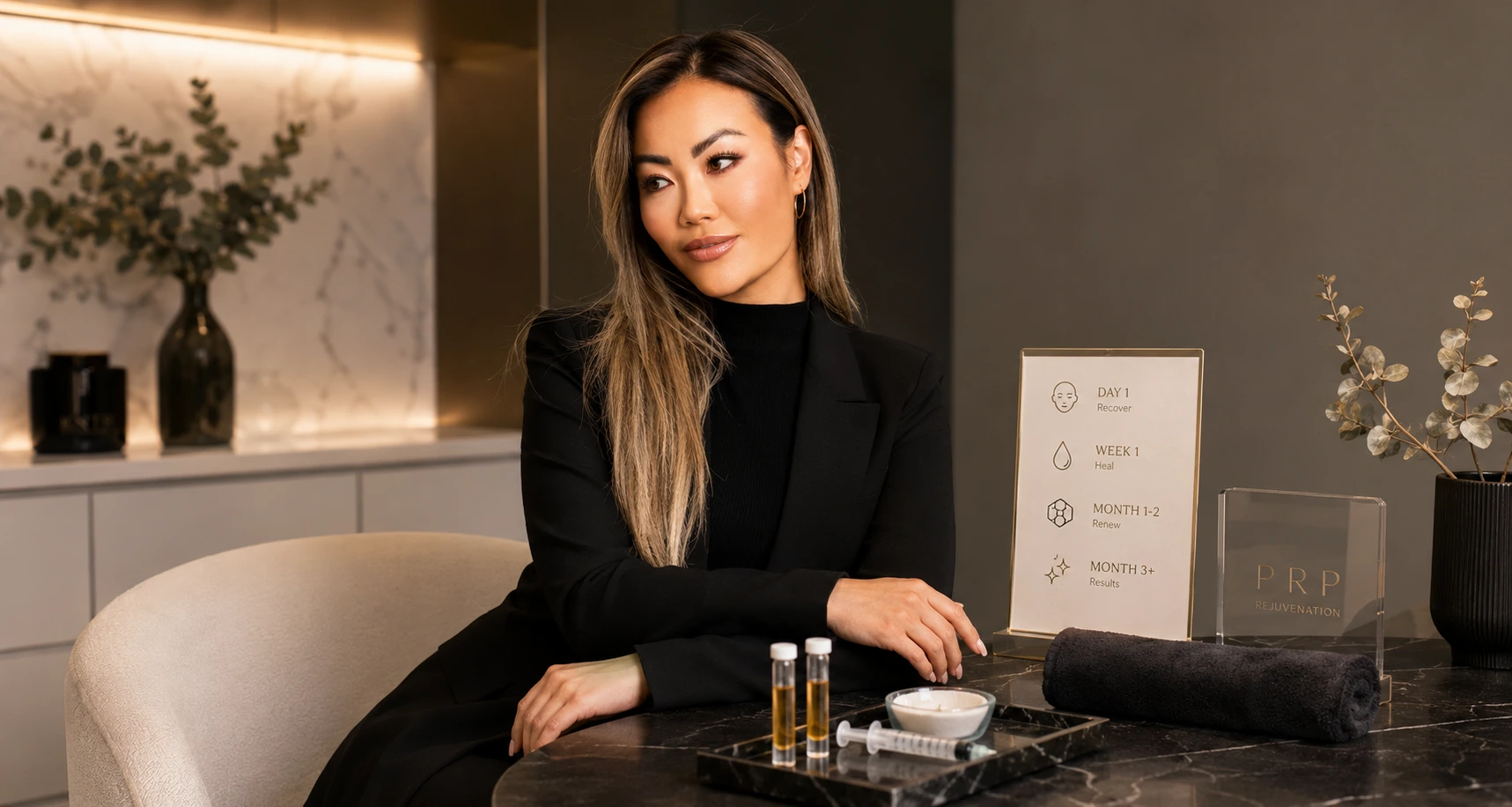
You have done the research. You understand how PRP works. You have booked your first session. Now you want to know what happens after the needles come out.
Post-treatment expectations are where a lot of PRP information falls short. Most resources focus on the procedure itself and skip over the recovery details that actually shape your experience. Whether you are getting PRP for your face or PRP for hair restoration, here is what the days and weeks after treatment actually look like.
You will leave the clinic with redness and mild swelling in the treated area. If PRP was combined with microneedling (a common protocol for facial rejuvenation), the redness will be more pronounced because you have both the PRP and the micro-channel healing happening simultaneously.
For facial PRP, your skin will look and feel like a moderate sunburn. Warmth, tightness, and sensitivity to touch are normal. Pin-point redness from the injection or microneedling sites may be visible.
For scalp PRP, you may notice mild tenderness at the injection sites and slight swelling across the treated area. Some clients experience a dull headache in the hours following treatment, which typically resolves with over-the-counter pain relief.
You can drive yourself home. There is no sedation or impairment involved.
This is the most restrictive window for aftercare.
Do not touch the treated area with unwashed hands. The micro-channels from microneedling (if used) are still open and vulnerable to bacteria.
No makeup on facial treatment areas for at least 24 hours. Mineral sunscreen is the only product that should go on your face during this window.
No strenuous exercise. Elevated blood pressure and sweating can increase swelling and irritation. Light walking is fine. Skip the gym.
No hot showers, saunas, or steam rooms. Heat dilates blood vessels and can worsen swelling and redness.
For scalp PRP: avoid washing your hair for at least 12 to 24 hours. When you do wash, use lukewarm water and a gentle shampoo. Avoid rubbing the scalp aggressively.
Sleep with your head slightly elevated if you had facial treatment. This helps reduce swelling overnight.
Redness begins to fade. Facial skin may feel dry, tight, or slightly rough as the surface heals. Scalp tenderness diminishes. Any mild bruising at injection sites may start to become visible as the initial swelling subsides.
You can resume your basic skincare routine (gentle cleanser, hydrating moisturizer, SPF) but should avoid active ingredients like retinoids, AHAs, BHAs, and vitamin C for at least five to seven days. These products can irritate healing skin and compromise the treatment response.
For scalp PRP, you can resume normal hair washing and styling. Avoid chemical hair treatments (coloring, perms, keratin treatments) for at least a week.
Most visible signs of treatment have resolved for the majority of clients. If microneedling was part of the facial protocol, you may see mild flaking as the outermost skin layer sheds. Do not pick at it.
You can resume exercise, active skincare, and makeup. Sun protection remains critical. UV exposure during the healing phase can trigger post-inflammatory pigmentation that undermines the treatment benefits.
By the end of the first week, you should feel comfortable with normal activities and your skin or scalp should feel settled.
PRP is not an instant-gratification treatment. The growth factors take time to stimulate the biological responses that produce visible results.
Facial PRP: You may notice improved glow and hydration within the first week or two. This initial brightness is partly from the healing response itself. The deeper improvements (firmer skin, smoother texture, improved tone) develop over two to three months as new collagen forms and matures.
Scalp PRP: Reduced shedding is often the first sign, typically noticed within four to eight weeks. Visible improvements in hair thickness and density usually become apparent three to six months after the initial treatment series. Hair grows slowly, so patience is necessary.
The peak effect from a single session occurs around six to eight weeks post-treatment. This is why sessions are typically spaced four to six weeks apart, each one building on the collagen stimulation from the previous session.
One PRP session produces a measurable biological response, but the visible results from a single treatment are modest. The treatment is designed to work cumulatively.
Facial PRP: Most protocols call for three sessions spaced four to six weeks apart. Each session deepens the collagen stimulation and improves skin quality progressively.
Scalp PRP: An initial series of three to four sessions spaced four to six weeks apart is standard. The cumulative effect of multiple sessions produces meaningfully better outcomes than a single treatment, as clinical research supports.
Skipping sessions or spacing them too far apart reduces the cumulative benefit. Consistency matters more than any single session.
After completing the initial series, maintenance sessions keep the results going.
Facial PRP: Every six to twelve months depending on your skin’s response and your overall treatment plan. Some clients align maintenance sessions with seasonal transitions, treating in the fall after summer sun exposure and in the spring to prepare for warmer months.
Scalp PRP: Every six to twelve months. Some clients find that annual sessions sustain their results. Others benefit from sessions every six months, particularly during the early years of treatment.
Your provider will recommend a maintenance schedule based on how your skin or scalp responded to the initial series.
PRP pairs well with other modalities, but timing matters.
PRP combined with microneedling can be done in the same session. The microneedling creates channels that allow PRP to penetrate deeper, and both treatments stimulate collagen through complementary pathways.
PRP and dermal fillers address different concerns (skin quality vs. volume), so they can be part of the same treatment plan but are typically performed in separate sessions spaced at least two weeks apart.
PRP and laser treatments can complement each other, with PRP supporting healing after laser procedures. Your provider will recommend appropriate spacing based on the specific laser used and the treatment intensity.
PRP recovery is mild and manageable. The first 24 hours require some care and restrictions. By day five to seven, most people have returned to their full routine. The real investment is patience: waiting for the biological response to produce visible results over weeks and months.
If you are ready to start or have questions about what to expect from your specific treatment plan, contact Kontour Medical Aesthetics to schedule your appointment or consultation.
Stay informed with expert insights, treatment guides, and the latest developments in medical aesthetics from Nurse Practitioner Belita Savage.


